Showing posts with label urban-development. Show all posts

Saturday, November 1, 2025

A Path to Replicate Japan's TOD in the Philippines

Replicating Japan’s Transit-Oriented Development (TOD) model in the Philippines requires more than just importing rail projects; it necessitates a tailored approach that addresses unique local political and economic realities. In Japan, TOD is defined by high-density, mixed-use neighborhoods centered on transit stations where rail operators often act as the real estate developers, financially tying transport to urban growth. Success in this model hinges on integrated mobility, walkable communities, and seamless institutional coordination between land use and transit policies.

Challenges in the Philippine Context

Philippines' public utility jeepney
Philippine's jeeps

The Philippine landscape presents several hurdles to this integrated model:

  • Fragmented Transport Systems: Metro Manila's buses, jeepneys, and UV Express units operate under a "boundary-system" that encourages on-road competition rather than a coordinated network.
  • Powerful Lobbying: Strong political and economic influence from bus and jeepney operators has historically diluted reform efforts.
  • Institutional and Land Use Gaps: Overlapping agency responsibilities, fragmented land ownership, complex property rights, and informal settlements along rail corridors complicate large-scale development.
  • Resource Constraints: There are often limited public funds available for massive transit infrastructure.
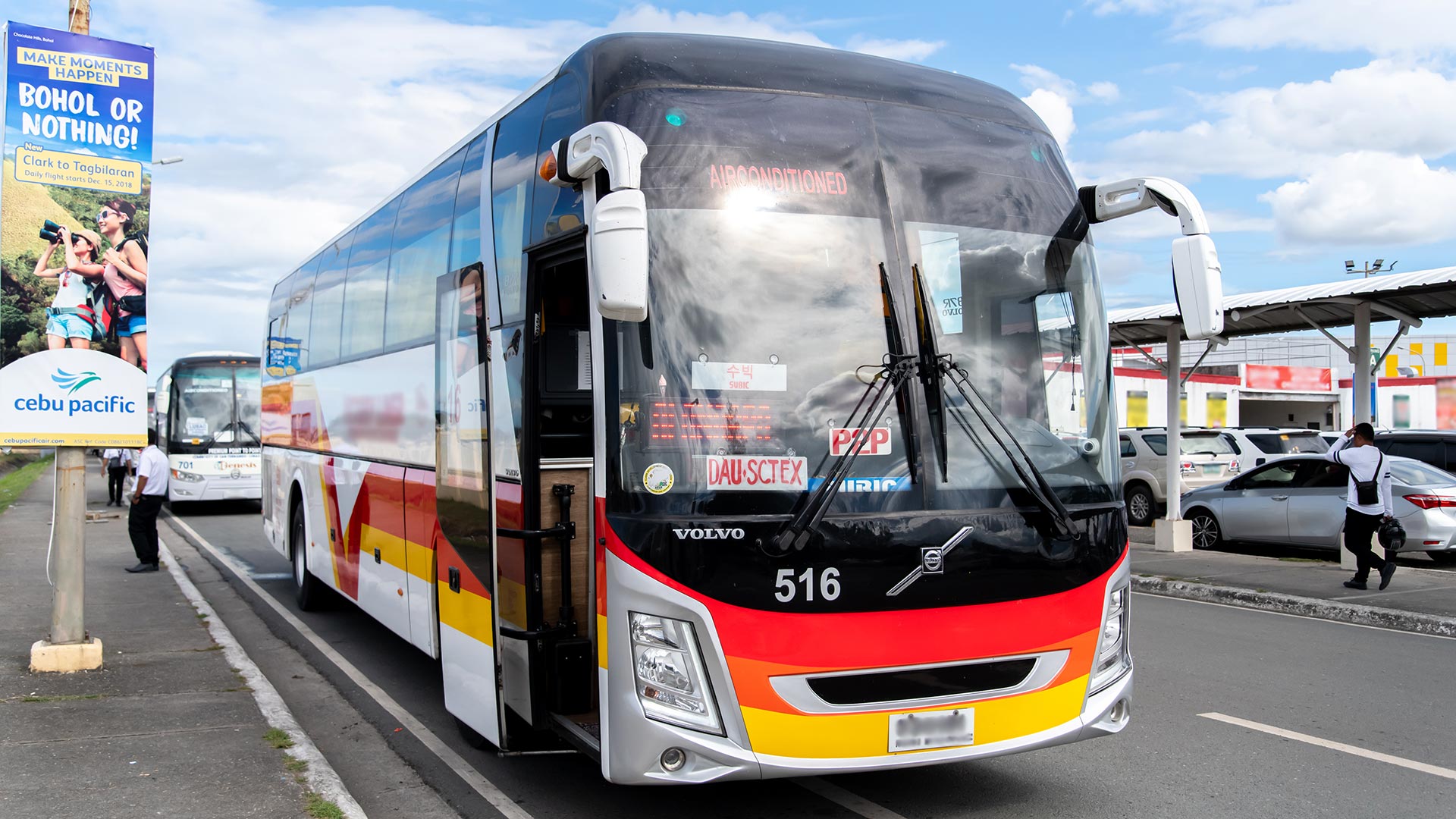
Philippine provincial buses

Strategies for Adaptation

To successfully localize TOD, policymakers should focus on the following pillars:

  1. Strengthened Governance and Policy Frameworks The Philippines should establish national TOD policy frameworks and dedicated task forces or special-purpose authorities. These bodies would include representatives from transport, housing, and local governments to align rail projects with feeder systems and zoning laws. Incentivizing local governments to adopt transit-friendly zoning can help streamline high-density mixed-use developments near stations.
  2. Elevated train
    Elevated train
    Reforming Transport into Integrated Networks Rather than replacing existing modes, the goal is phased integration. This involves shifting from "in-market competition" to competitive tendering, where operators bid for the right to serve specific corridors under strict performance standards. Buses and jeepneys should be transitioned into feeder services that align with rail schedules and unified fare systems.
  3. Inclusive Stakeholder Engagement To neutralize resistance, bus and jeepney operators must be treated as partners rather than opponents. Strategies include:
    • Offering operators equity stakes in new TOD projects or joint ventures for transit hubs.
    • Providing transition pathways where operators are contracted for "first-and-last-mile" services within TOD zones.
    • Offering technical and financial support to help operators upgrade fleets and integrate digital scheduling.
  4. Train station
    Train station
    Financial and Land Use Innovation Since public funds are limited, the Philippines can utilize Land Value Capture tools, such as special assessment districts and development impact fees, to fund transit via rising property values. Tax Increment Financing (TIF) and "Land Readjustment" mechanisms — adapted for informal settlement contexts — can help consolidate land for development. Developers might also be granted higher floor-area ratios (FAR) in exchange for funding integrated terminals.
  5. Adaptive Design and "TOD-lite" Initial efforts can focus on "complete street" standards that prioritize pedestrians and cyclists near transit nodes. This "TOD-lite" approach emphasizes immediate improvements in walkability, traffic management, and space for informal street vendors before major infrastructure is finalized.

Electrified at-grade trams

The Path Forward: Pilot Projects

Successful implementation should begin with high-impact pilot projects in progressive areas like Manila City (the city jail redevelopment at the intersection of LRT1 and LRT2), Makati City, Taguig City, or Quezon City, where rail infrastructure already exists. These pilots allow for the testing of "Transit Coalitions" involving rail agencies, developers, and bus operators to share benefits and build public support.

Another approach to piloting is to implement in suburbs such as Antipolo City, Rizal towns (Angono, Binangonan, Cardona, Morong, Baras, Tanay, Pililla, and Jala-jala) or Cavite towns.

The ultimate goal is a "Philippine TOD hybrid" that respects the existing transport ecosystem while gradually transforming it into a more efficient, equitable, and integrated urban system.

To visualize this integration, consider the "Swiss Cheese Model": rather than one system trying to do everything, each mode of transport—rail, bus, and jeepney—acts as a layer that fills the gaps (the holes) of the others, eventually creating a solid, seamless block of mobility.

AI assistance (ChatGPT, OpenAI, DeepSek, Gemini) was used to help draft and organize this blog post; the author takes full responsibility for the final content.

References

Reform bus transport system to ease Metro Manila traffic woes — PIDS study, https://www.pids.gov.ph/details/reform-bus-transport-system-to-ease-metro-manila-traffic-woes-pids-study

Transit Oriented Development (TOD) - Sharing our experience with the world, https://www.ur-net.go.jp/overseas/urtod.html

BCDA, JICA ink deal on promoting transport-oriented dev’ts, https://www.pna.gov.ph/articles/1198069


Saturday, October 25, 2025

Private Railway Companies in Japan are Real-Estate Developers

The Core Principle: "Railways as a Means to an End"

JR_East_E657
JR East E657 series EMU set K-1 near Kita-senju Station
 on a test-run on the Joban Line

For these companies, the railway line itself is often not the primary profit center. Instead, it is the catalyst that increases the value of land and creates captive customer flows for their other businesses. The railway makes remote, undervalued land accessible and desirable, and the company captures the resulting economic value.

The Historical Development Model (The "Garden City" Approach)

This model took off in the early 20th century, particularly in the rapidly growing metropolitan areas of Tokyo and Osaka.

1.  Land Acquisition: A railway company would purchase large, cheap tracts of agricultural land far from the city center.

2.  Railway Construction: They would build a rail line connecting this land to the city center.

3.  Development & Value Creation: They would then develop the land around their stations:

  • Residential: Suburban housing communities ("danchi") for commuters.
  • Commercial: Department stores (often right above or adjacent to the terminal station, e.g., Tokyu Store at Shibuya, Hankyu Store at Umeda).
  • Leisure: Amusement parks (e.g., Tobu Zoo Park, Seibu's Tamako Park), resorts, hotels, and golf courses along the line.

4.  Ridership Guarantee: The residents of these communities become daily commuters, guaranteeing a stable ridership for the railway. The shoppers and leisure seekers provide additional weekend and holiday ridership.

This creates a powerful, self-reinforcing cycle: Better development attracts more riders → More riders justify better train service (more frequent, express trains) → Better service increases land value and attracts more development.

Types of Trains in Japan: Using Trains Efficiently While Traveling
matcha-jp.com

Key Examples of Major Conglomerates

  • Tokyu Corporation: The archetype. Developed much of southwest Tokyo (Shibuya, Den-en-chofu) and Kanagawa. Its empire includes Tokyu Land (real estate), Tokyu Store (retail), and Tokyu Hotels.
  • Hankyu Hanshin Holdings: Pioneered by Ichizo Kobayashi, who famously said, "The railway is the hardware, and the content it carries is the software." He built the Hankyu line from Osaka to the suburb of Takarazuka, developing housing and creating the famed Takarazuka Revue all-girl theater troupe to attract riders. The flagship Hankyu Department Store at Umeda Station is iconic.
  • Keio Corporation and Keisei: Major players in western and eastern Tokyo, respectively, with extensive real estate and retail operations.
  • Tobu Railway: Dominates the northern Tokyo area and Tochigi, with massive developments, the Tokyo Skytree, and resorts like Nikko.
  • Seibu Group: Developed western Tokyo and Saitama, with flagship department stores, the Prince Hotel chain, and professional baseball teams (the Saitama Seibu Lions).

Modern Evolution: "Transit-Oriented Development (TOD) on Steroids"

The model has evolved but remains central. Today, it focuses on creating "terminal cities" or "ekinaka" (within-station) economies.

1.  Station as a Destination: Major terminals (like Shibuya Stream developed by Tokyu, or Osaka Station City developed by JR West) are no longer just transit points. They are integrated complexes of offices, luxury hotels, high-end retail, cinemas, and public spaces.

2.  Capturing Passenger Flow: By owning the station building and adjacent structures, the railway company directly monetizes the flow of passengers through rent, retail sales, and food & beverage.

3.  Synergy Across Sectors: A company can leverage all its divisions for a single project:

  • Railway Division: Provides transport access.
  • Real Estate Division: Develops the offices and residences.
  • Retail Division: Operates the department store and specialty shops.
  • Leisure Division: Runs the hotel and cinema.

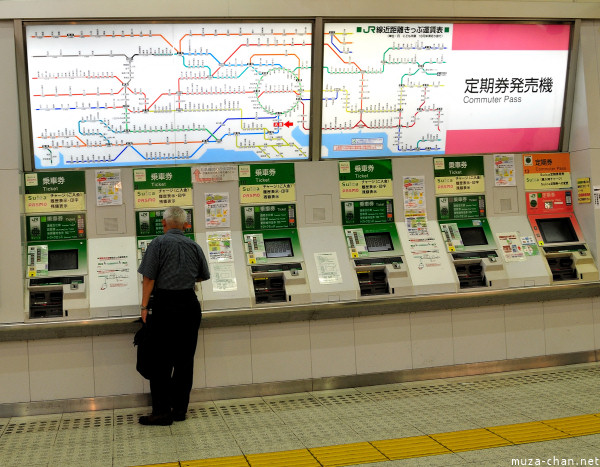
Japan Ticket vending machines
Ticket vending machines on the Omori JR Station

Why This Model is So Successful in Japan

  • Deregulation: Japan's land use laws are relatively flexible, allowing for mixed-use development around stations.
  • High Rail Reliance: Dense populations and cultural preference for public transit ensure strong ridership.
  • Integrated Corporate Structure: A single corporate group can coordinate all aspects of planning, avoiding the conflicts common between separate transport and property entities.

In Contrast: Public vs. Other Private Railways

  • Japan Railways (JR): Formerly national, now privatized. Some JR companies (especially JR East) have adopted similar real estate strategies (e.g., redeveloping Tokyo Station's GranRoof and KITTE mall), but their history and land holdings differ from the classic private developers.
  • Subways & Public Lines: Many municipal subway lines primarily focus on transport and lack the vast land holdings for large-scale development, though they do engage in station-area commerce.

Summary

Japanese private railway companies are real-estate developers that happen to own a railway. The railway is the strategic infrastructure that creates value in their land holdings and delivers customers directly to their commercial properties. This symbiotic, closed-loop system is a key reason for the efficient, dense, and commercially vibrant urban landscape found around train stations throughout Japan.