Saturday, April 25, 2026

Marxism vs. Catholicism on Human Work

While Marxism and Catholicism stand on drastically different theological and philosophical foundations, they share a surprisingly deep, intense preoccupation with the concept of human work. Both frameworks reject the idea that work is merely a cold economic transaction—a way to turn time into survival. Instead, both see work as a core element of what makes us human.

The divergence lies in why work matters, what corrupts it, and where it ultimately leads.

1. Points of Convergence (Where They Agree)

Work as a Defining Human Characteristic

  • Marxism: Marx argued that work (labor) is the primary way human beings express their nature. Unlike animals, who produce only for immediate physical needs, humans produce universally, creatively, and consciously. We "objectify" ourselves in our work—we shape the physical world and, in doing so, realize our own potential.
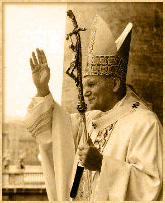
  • Saint John Paul II, courtesy of vatican.va
    Pope Saint John Paul II
    Catholicism
    : Catholic Social Teaching (CST), particularly articulated by Pope John Paul II in his 1981 encyclical Laborem Exercens (On Human Work), states that work is a fundamental dimension of human existence on earth. Through work, humans participate in the activity of the Creator and fulfill a mandate given at creation.
The Priority of Labor Over Capital

Both traditions vehemently reject the capitalist view that treats labor as a mere commodity or "input" to be optimized for profit.

  • Marxism: Capital is nothing more than "dead labor"—past work that has been accumulated and is now used to exploit living labor. Labor is the sole source of economic value; therefore, human needs must dictate production, not the self-expansion of capital.
  • Catholicism: CST establishes the Principle of the Priority of Labor, which dictates that labor is always the primary efficient cause of production, while capital is a mere instrument. People are more important than things, and profits must never be pursued at the expense of human dignity.

The Critique of Modern Exploitation

  • Marxism: Under capitalism, the worker is systematically stripped of the fruits of their labor, reducing work to a grueling chore performed out of sheer necessity.
  • Catholicism: The Church sharply criticizes systems that reduce workers to mere cogs in a machine. It condemns wage theft, unsafe working conditions, and economic structures that isolate individuals or destroy family life.

2. Points of Divergence (Where They Clash)

Dimension

Marxism

Catholicism

Ultimate Source & Purpose

Materialist/Historical: Work is a purely secular, creative act of self-creation and historical development. There is no divine design.

Theological/Spiritual: Work is a co-creation with God. It has a transcendent purpose: to perfect creation, serve the community, and sanctify the worker.

The Core Problem

Alienation (Entfremdung): The capitalist system separates the worker from the product, the act of production, their human nature, and their peers.

Sin and Moral Disorder: While structural injustice exists, the root of bad work conditions is human sin, selfishness, and a lack of solidarity.

Private Property

Abolition: Private ownership of the means of production is the fundamental source of exploitation and must be dismantled.

Regulated Right: Private property is a natural right, but it is strictly bound by the Universal Destination of Goods—property must serve the common good.

The Solution

Revolutionary Overthrow: The working class must seize the means of production, eliminate class distinctions, and establish a communist society.

Solidarity and Subsidiarity: Reform via moral conversion, state regulation, strong labor unions, and cooperation between classes, not class warfare.

3. The Root Conceptions: Alienation vs. Sanctification

To fully grasp the contrast, it helps to look at the peak expression of work in both systems.

Marxism: Overcoming Alienation

Karl Marx, courtesy of Wikipedia.
Karl Marx
For Marx, when a worker sells their labor-power to a capitalist, their work is no longer their own. It becomes an alien object that dominates them. The goal of Marxism is to reclaim this labor. In a post-capitalist, communist society, work changes from a forced means of survival into "life's prime want."

"In a communist society, where nobody has one exclusive sphere of activity... society regulates the general production and thus makes it possible for me to do one thing today and another tomorrow, to hunt in the morning, fish in the afternoon, rear cattle in the evening, criticize after dinner..." — Karl Marx, The German Ideology

Catholicism: The "Gospel of Work"

Catholicism counters the pain of difficult labor not with a future utopia, but with the concept of sanctification. Because Jesus Christ was a carpenter, mundane, physical labor is viewed as holy.

CST distinguishes between the objective sense of work (the technology, products, and structures created) and the subjective sense of work (the person performing it). The subjective dimension is always paramount: work is good not because of what is made, but because the person making it develops intellectually, socially, and spiritually. Even in difficult or flawed conditions, work allows a person to join their sufferings to Christ’s sacrifice, turning effort into an act of love and service.

Summary of the Clash

Ultimately, Marxism views work through a lens of liberation from systemic structures—an earthly emancipation realized by changing who owns the tools. Catholicism views work through a lens of vocation and stewardship—an earthly duty with an eternal echo, realized by aligning human structures with moral law and divine purpose.

AI assistance (Gemini and Notebook LM) was used to help draft and organize this blog post; the author takes full responsibility for the final content.

Saturday, April 18, 2026

6x6 Mini Sudoku

Mini Sudoku

6x6 Grid (Numbers 1-6)
🎉 Congratulations! You solved it! 🎉

Saturday, April 11, 2026

From Personality to Platform: A Pragmatic Path to an "Alloyed" Republic

I have often found that our political discourse is trapped in a "winner-takes-all" cycle. We look for a singular savior to fix our infrastructure, secure our borders, and heal our social divides. But as we look toward a future that demands both stability and inclusivity, I believe it is time to shift our gaze from the "Strongman" to the System.

I’ve come to prefer a semi-presidential system, much like those found in Finland or France. In this model, the roles of Head of State and Head of Government are vested in two different individuals. It is a "bicephalous" (two-headed) executive that offers the precise checks and balances our democracy currently craves.

The Goal: A Consociationalist "Alloy"

incrementalism infographic 1
Incrementalism Infographic 1
My primary motivation for this shift is National Unity. By splitting the executive, we can create a structure that accommodates the ideological diversity of the Philippines. I see it as a way to "alloy" rightist and leftist interests:

  • The President as the Anchor: A directly elected President remains the Commander-in-Chief and the "Guardian of the State." This provides the military and the business community—my primary colleagues in the legal sector—with the security of knowing that national sovereignty and the rule of law remain steady.
  • The Prime Minister as the Engine: A Prime Minister, chosen by the legislature and confirmed by the President, manages domestic policy. If a leftist bloc gains power, they are given the "keys to the kitchen." They become accountable for their advocacy, forced to deliver on public services and infrastructure rather than just criticizing from the sidelines.

Consociationalist approach to Semi-Presidentialism
This consociationalist approach ensures that no group is left out of the tent. When the "clash" of interests happens through parliamentary debate and cabinet negotiations rather than in the streets, we achieve a more resilient social peace.

The Method: Incrementalism over Revolution

While a full constitutional overhaul is the most direct route, I advocate for Incrementalism. We can phase this in through clever legislation and administrative practice before ever touching the Constitution.

We can begin by formalizing the "Lead Cabinet Secretary" role, creating a "de facto" Prime Minister who manages the day-to-day mechanics of government. By using the legal Doctrine of Qualified Political Agency, we can allow the President to voluntarily delegate domestic affairs to a cabinet leader who holds the "confidence" of the legislature.

This allows our political culture to "practice" power-sharing. It transitions us from a "personality-driven" culture to a "platform-driven" one, where performance matters more than a famous last name.

Why the Business Community Should Lead

incrementalism infographic 2
Incrementalism Infographic 2 
From a corporate perspective, the "Finland Model" is a masterclass in risk management. Investors fear erratic policy shifts. In this "alloyed" system, sudden, radical moves are nearly impossible because they require the signature of a Prime Minister (representing the current political will) and the acquiescence of a President (representing state continuity).

Our priorities are clear:

  1. Ensuring National Unity: Using the dual executive to neutralize "us vs. them" politics.
  2. Improving Efficiency: Letting a specialized Head of Government focus solely on infrastructure and services.

By building a system that is stronger than any one individual, we don't just improve our government; we secure our future. It is a risk worth taking—to move away from the shadow of the strongman and into the light of a balanced, professional, and unified Republic.

AI assistance (Gemini) was used to help draft and organize this blog post; the author takes full responsibility for the final content.