While Marxism and Catholicism stand on drastically different theological and philosophical foundations, they share a surprisingly deep, intense preoccupation with the concept of human work. Both frameworks reject the idea that work is merely a cold economic transaction—a way to turn time into survival. Instead, both see work as a core element of what makes us human.
Marxism vs. Catholicism on Human Work
The divergence lies in why work matters, what corrupts it, and where it ultimately leads.
1. Points of Convergence (Where They Agree)
Work as a Defining Human Characteristic
- Marxism: Marx argued that work (labor) is the primary way human beings express their nature. Unlike animals, who produce only for immediate physical needs, humans produce universally, creatively, and consciously. We "objectify" ourselves in our work—we shape the physical world and, in doing so, realize our own potential.
-
Catholicism: Catholic Social Teaching (CST), particularly articulated by Pope John Paul II in his 1981 encyclical Laborem Exercens (On Human Work), states that work is a fundamental dimension of human existence on earth. Through work, humans participate in the activity of the Creator and fulfill a mandate given at creation.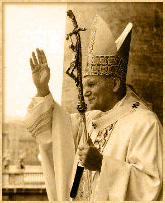
Pope Saint John Paul II
The Priority of Labor Over Capital
Both traditions vehemently reject the capitalist view that treats labor as a mere commodity or "input" to be optimized for profit.
- Marxism: Capital is nothing more than "dead labor"—past work that has been accumulated and is now used to exploit living labor. Labor is the sole source of economic value; therefore, human needs must dictate production, not the self-expansion of capital.
- Catholicism: CST establishes the Principle of the Priority of Labor, which dictates that labor is always the primary efficient cause of production, while capital is a mere instrument. People are more important than things, and profits must never be pursued at the expense of human dignity.
The Critique of Modern Exploitation
- Marxism: Under capitalism, the worker is systematically stripped of the fruits of their labor, reducing work to a grueling chore performed out of sheer necessity.
- Catholicism: The Church sharply criticizes systems that reduce workers to mere cogs in a machine. It condemns wage theft, unsafe working conditions, and economic structures that isolate individuals or destroy family life.
2. Points of Divergence (Where They Clash)
3. The Root Conceptions: Alienation vs. Sanctification
To fully grasp the contrast, it helps to look at the peak expression of work in both systems.
Marxism: Overcoming Alienation
.png/250px-Karl_Marx_by_John_Jabez_Edwin_Mayall_1875_-_Restored_%26_Adjusted_(3x4_cropped_b).png "Karl Marx, courtesy of Wikipedia.") |
| Karl Marx |
"In a communist society, where nobody has one exclusive sphere of activity... society regulates the general production and thus makes it possible for me to do one thing today and another tomorrow, to hunt in the morning, fish in the afternoon, rear cattle in the evening, criticize after dinner..." — Karl Marx, The German Ideology
Catholicism: The "Gospel of Work"
Catholicism counters the pain of difficult labor not with a future utopia, but with the concept of sanctification. Because Jesus Christ was a carpenter, mundane, physical labor is viewed as holy.
CST distinguishes between the objective sense of work (the technology, products, and structures created) and the subjective sense of work (the person performing it). The subjective dimension is always paramount: work is good not because of what is made, but because the person making it develops intellectually, socially, and spiritually. Even in difficult or flawed conditions, work allows a person to join their sufferings to Christ’s sacrifice, turning effort into an act of love and service.
Summary of the Clash
Ultimately, Marxism views work through a lens of liberation from systemic structures—an earthly emancipation realized by changing who owns the tools. Catholicism views work through a lens of vocation and stewardship—an earthly duty with an eternal echo, realized by aligning human structures with moral law and divine purpose.
AI assistance (Gemini and Notebook LM) was used to help draft and organize this blog post; the author takes full responsibility for the final content.

No comments:
Post a Comment