Saturday, December 27, 2025

All Aboard: How We Can Build Better Railways With Private Investment

AS governments and industry leaders look at our national railway, we often ask: how can we make it more efficient, innovative, and financially sustainable? The answer increasingly lies in smart partnerships with the private sector. But we can’t just sell off assets and hope for the best. Based on global lessons, let’s talk about how we should structure our rail industry to attract beneficial private investment, big and small.

Laying the Foundation: The Non-Negotiables

Before we invite anyone to the table, we must build an unshakable foundation. These are the pillars every modern, mixed-system railway needs:

  • Our Legal Clarity: We must create a crystal-clear, stable legal framework. Investors need to know the rules of the game—how property rights, contracts, and disputes will be handled—and trust that they won’t change overnight.
  • Separating Our Roles: Here’s a crucial step: we must untangle the state’s various hats. We need to be a clear Policymaker setting national strategy. We must create an independent Regulator to act as a fair referee, setting access fees and policing competition. And we should establish a standalone Infrastructure Manager (often state-owned) to impartially maintain the tracks and stations for all.
  • Our Open Access Promise: This is the golden rule. We must legally guarantee that any qualified, licensed train operator can run services on our national network for a fair fee. This principle is the engine of competition.

Our Playbook: Models That Work Worldwide

Now, with our foundation set, let’s explore the practical models we can adapt. Think of this as a menu of options for different parts of our network.

1. Bringing Competition to the Tracks (Operations)

  • Franchising Passenger Routes: For many core passenger services, we can specify the schedules, fares, and quality. Private companies then bid for the right to run these services for 7-15 years. They take on the commercial risk to attract riders, while we retain control over the public service mandate.
  • True Open-Access Rivalry: On our busiest corridors, why not let private operators propose their own services? Let them compete with our state operator on price, comfort, and brand. This sparks innovation but requires our regulator to be strong and vigilant.
  • Unleashing Freight Rail: This is the easiest win. Globally, freight rail is predominantly private. We should fully open this sector, allowing multiple private companies to own wagons and compete to move goods, driving efficiency in our logistics chain.

2. Unlocking Capital for Infrastructure

  • Building New Lines with Partners: For that new high-speed line or dedicated freight corridor, a public-private partnership (PPP) like Build-Own-Operate-Transfer (BOOT) can be ideal. A private consortium funds and builds it, operates it for 25-30 years to recoup its investment, then hands it back to us.
  • Developing Our Stations into Destinations: Our city-center stations are goldmines of underused space. We can bring in investors (big and small) to redevelop them into vibrant hubs with shops, offices, and housing. The commercial revenue can then cross-subsidize the transport function.
  • Smarter Maintenance Contracts: We can sign long-term, performance-based contracts where private partners take responsibility for maintaining specific sections of our network. We pay for clear outcomes—reliability and safety—not just for activities.

3. Investing in the Tools and Services

  • Creating a Rolling Stock Market: Instead of forcing every operator to buy trains, we can foster private Rolling Stock Companies (ROSCOs). These companies own the trains and lease them to operators, lowering the barrier to entry and bringing institutional investment into the sector.
  • Empowering Small Innovators: Not every investor is a giant corporation. We must create avenues for smaller players in catering, digital ticketing apps, station retail, logistics warehousing, and specialized maintenance. A dynamic ecosystem needs businesses of all sizes.

Our Implementation Roadmap: Start Smart, Scale Wisely

We shouldn’t try to do everything at once. Here’s our suggested journey:

  1. Map & Segment Our Network First. Let’s be honest: not every line is commercially attractive. We must identify our high-density “profit pools,” our socially necessary but unprofitable rural lines, and our strategic freight corridors. Each segment requires a different model.
  2. Start with the Obvious Wins. Let’s build confidence. Opening freight rail, tendering out station concessions, and privatizing non-core maintenance are less politically fraught and show tangible benefits.
  3. Design Bulletproof, Transparent Tenders. Our bidding processes must be fair, open, and based on international best practices. Perception of fairness is as important as the rules themselves.
  4. Get the Risk Balance Right. This is critical. We must bear the risks we control (like policy changes), while private partners bear the risks they manage (like operational efficiency). For big PPPs, demand risk can be shared through intelligent mechanisms.
  5. Protect the Public Interest Relentlessly. For unprofitable but essential services, we will use Public Service Obligation (PSO) contracts. We’ll pay a operator (public or private, chosen by competition) a fee to run these services. This separates social policy from commercial markets.

Examples of Global Configurations

  • European Model (EU Directive Inspired): Full vertical separation (infrastructure from operations) + open access + independent regulator. A mix of state-owned and private operators compete. (e.g., Sweden, UK, Germany).
  • Japanese Model (Regional Integrated Companies): Privately owned, vertically integrated passenger railway companies (JR East, Central, etc.) own both tracks and trains in their region. They are highly profitable due to massive real estate development around stations. Competition exists between different regional companies and on some parallel lines.
  • North American Model: Mostly private freight railroads that own their infrastructure (Class I railroads). Passenger services (Amtrak, Via Rail) are state-run and pay access fees to run on privately owned freight tracks.

Our Watch-Outs: Navigating the Risks

As we move forward, we must keep our eyes open:

  • Guard Against "Cherry-Picking": We’ll bundle lucrative and less-lucrative routes in franchises to ensure full network coverage.
  • Prevent Asset Neglect: Our contracts and regulator will mandate strict maintenance and renewal standards.
  • Manage the Human Impact: We will plan for our workforce with transparency, offering retraining and fair transition pathways.

The Bottom Line

The goal isn’t a fully privatized railway, nor a fully state-run one. The global best practice we should adopt is a smart, hybrid system. Our role as the state is to be the strong rule-setter, planner, and referee. The private sector’s role is to bring capital, managerial efficiency, and customer-focused innovation to the segments where it excels.

By getting this configuration right, we can build a railway that is more sustainable, responsive, and powerful—a true engine for our national growth. Let's get to work.

Saturday, December 20, 2025

Key Strategies for Adopting Japanese TOD in the Mindanao Railway Project

AS enthusiasts and advocates for sustainable urban development in the Philippines, we are excited about the potential of the Mindanao Railway Project (MRP) to transform our island. This ambitious initiative aims to create the first comprehensive rail network across Mindanao, beginning with Phase 1 — a 100 km line from Tagum to Digos via Davao City, featuring eight modern stations. The broader vision expands to over 2,000 km, linking major hubs like Davao, General Santos, Cagayan de Oro, Iligan, Cotabato, Zamboanga, Butuan, Surigao, and Malaybalay. As of February 2026, the project is advancing with renewed momentum under the Marcos administration: right-of-way acquisitions are underway (including preparations to relocate affected families), a new Asian Development Bank-funded feasibility study is set to begin mid-2026, and interest from multiple firms signals growing viability despite no dedicated allocation in the 2026 national budget.


We see tremendous opportunity to model this around Japan's renowned transit-oriented development (TOD) approach. Pioneered by private railway operators like Hankyu and Tokyu over a century ago, Japan's TOD integrates high-density, mixed-use communities around efficient rail hubs — creating walkable, vibrant neighborhoods that reduce car reliance, boost economic activity, and promote sustainability. Tokyo and Osaka stand as global exemplars of how rail can drive inclusive growth. We believe Mindanao can adapt this model thoughtfully, accounting for our unique blend of urban centers, rural landscapes, agrarian economies, and environmental vulnerabilities.


Building Strong Institutional Foundations and Building Local Capacity

We must start by establishing robust frameworks to guide TOD implementation. We propose creating a dedicated TOD coordination unit within the Department of Transportation (DOTr) or the Mindanao Development Authority (MinDA), inspired by Japan's Urban Renaissance Agency. This body would oversee land use planning, stakeholder alignment, and policy enforcement across national and local levels.

We can draw directly from Japanese expertise through ongoing partnerships with JICA and Japan's Ministry of Land, Infrastructure, Transport and Tourism (MLIT). By participating in technical workshops and capacity-building programs—similar to those supporting Metro Manila—we can train our local planners and officials in TOD principles, including data-driven visualization tools for assessing infrastructure impacts like flood risks. Collaborations with GIZ further strengthen our ability to overcome coordination challenges. We suggest piloting these efforts on Phase 1 stations to build momentum and expertise.

Crafting Comprehensive Master Plans for Station Precincts

Figure 1- Common Features of Transit-Oriented Development (15226157963)
Transit-oriented-development

At the heart of Japanese TOD success is thoughtful precinct design. We envision MRP stations as mixed-use hubs with residential, commercial, office, recreational, and public amenities within a comfortable 500–800 meter walking radius. Seamless integration with buses, jeepneys, and connections to airports and seaports will be essential.

We advocate adopting zoning incentives like floor area ratio (FAR) bonuses and tax breaks to encourage vertical, high-density development—adapted to Mindanao's context by prioritizing agro-industrial linkages. Stations could serve as gateways for processing and distributing agricultural products, spurring rural-urban economic ties. Incorporating green spaces and disaster-resilient features (e.g., elevated structures for typhoon-prone areas) will ensure sustainability. We can build on JICA's conceptual TOD frameworks from other Philippine projects, tailoring them to our island's lower densities and community needs.

Leveraging Public-Private Partnerships and Private Sector Drive

Japan's model thrives on private railway companies leading development. We should emulate this by inviting interested firms—several of which have already expressed enthusiasm for MRP—to partner via public-private partnerships (PPP). Private developers could construct commercial complexes, housing, or retail around stations in exchange for operational involvement or land rights.

We see government facilitating land consolidation and acquisitions (as currently progressing in Phase 1), while private partners deliver value-capturing projects like malls or mixed-income communities. Insights from Japan's PPP experiences, shared through bodies like our PPP Center, can guide sustainable, long-term railway operations.


Unlocking Financing Through Land Value Capture

Sustainable funding is key. We can adopt Japanese mechanisms such as capturing increased land values via air rights sales, targeted property taxes, and development levies to help finance TOD and offset project costs. Incentives for eco-friendly builds—aligned with DOTr's emphasis on modern, low-emission trains—will attract investment.

We also encourage pursuing official development assistance from Japan or multilateral partners, linking support to measurable TOD outcomes like higher ridership and economic uplift.

Prioritizing Sustainability, Inclusivity, and Community Voices

True Japanese TOD succeeds by fostering livable, low-carbon communities. We aim to shift Mindanaoans toward rail through enhanced walkability, cycling infrastructure, and feeder services—reducing congestion and emissions while advancing SDG goals for sustainable cities.

We commit to inclusive planning: engaging communities early, especially the families affected by relocations, and incorporating affordable housing and local job opportunities in TOD zones. Environmental safeguards, like green standards and climate-resilient designs, will protect our tropical ecosystems.

Navigating Challenges with Strategic Mitigation

We recognize hurdles—lower urban densities potentially limiting early ridership, multi-level government coordination, and funding uncertainties (evident in the 2026 budget). We mitigate these by starting with scalable pilots in denser corridors like Davao, using Japanese data tools for rigorous studies, and securing early PPP commitments.

By embracing these strategies, we can turn the Mindanao Railway into a catalyst for connected, prosperous, and sustainable communities—much like Japan's rail networks have done for decades. With strong partnerships and forward-thinking planning, we are optimistic that Mindanao can achieve its own version of TOD excellence. Let's build this future together!

AI assistance (GrokAI) was used to help draft and organize this blog post; the author takes full responsibility for the final content.

Related News

Marcos revives Mindanao railway project, https://www.philstar.com/business/2026/02/02/2505064/marcos-revives-mindanao-railway-project

Saturday, December 13, 2025

Can We Build a Modern Nation Without Tracks? A Deep Dive into the Logistics of Industrialization

In our latest strategy sessions at the firm, we’ve been grappling with a question that feels personal to anyone stuck in Manila traffic: Can a nation the size of the Philippines truly reach "Industrialized Status" without a robust railway industry?

It’s a fascinating theoretical puzzle. On one hand, we are an archipelago, naturally leaning toward maritime trade. On the other, our major landmasses are surprisingly vast. To find the answer, we looked at the physics of friction, the history of economic giants, and the specific "loopholes" that might allow a nation to skip the rails.

The "Logistics Tax" Problem


As we analyze the path to industrialization, we have to acknowledge the elephant in the room: Heavy Industry is heavy. To move the massive volumes of raw materials—steel, coal, and chemicals—needed for a primary industrial economy, we need efficiency. In our research, we found that steel wheels on steel rails are roughly 3 to 4 times more fuel-efficient than rubber tires on asphalt.

Freight Train

When we rely solely on trucking to move industrial freight across Luzon or Mindanao, we are essentially paying a permanent "logistics tax." This makes our locally produced goods more expensive and less competitive on the global stage.

The Comparison: Why Landmass Matters

We often hear the argument that "we are a nation of islands, so we don't need trains." But when we look at the numbers, the scale of our islands tells a different story.

  • Luzon (~109,000 km²) is actually larger than South Korea.
  • Mindanao (~97,000 km²) is larger than Ireland.

We’ve observed that no nation of this land area and population (110M+) has ever industrialized without a backbone of rail. From Japan to the UK, every modern manufacturing powerhouse used rail to connect their internal markets. Without it, the interior of our islands remains "locked" in an agrarian state, simply because it’s too expensive to move heavy goods to and from the center.

Is There a "Loophole"?


Can we be the first to do it differently? We believe there is a narrow path, but it requires a radical shift in how we think about the economy:

  1. The Coastal-Only Model: We could concentrate all heavy industry strictly on deep-water ports. In this scenario, the ocean becomes our "railway."
  2. The "Leapfrog" Strategy: We could skip heavy manufacturing entirely. If we focus solely on High-Value/Low-Weight goods (like microchips and electronics) and Digital Services (BPOs and Tech), we can bypass the need for freight trains. You can't put a call center on a flatbed rail car, and you don't need a locomotive to ship a box of semiconductors.

Our Take: While this "Leapfrog" strategy works for a small city-state like Singapore, we believe it's a massive gamble for a population as large as ours. A service-only economy rarely provides enough high-paying jobs for 110 million people.

Our Final Verdict

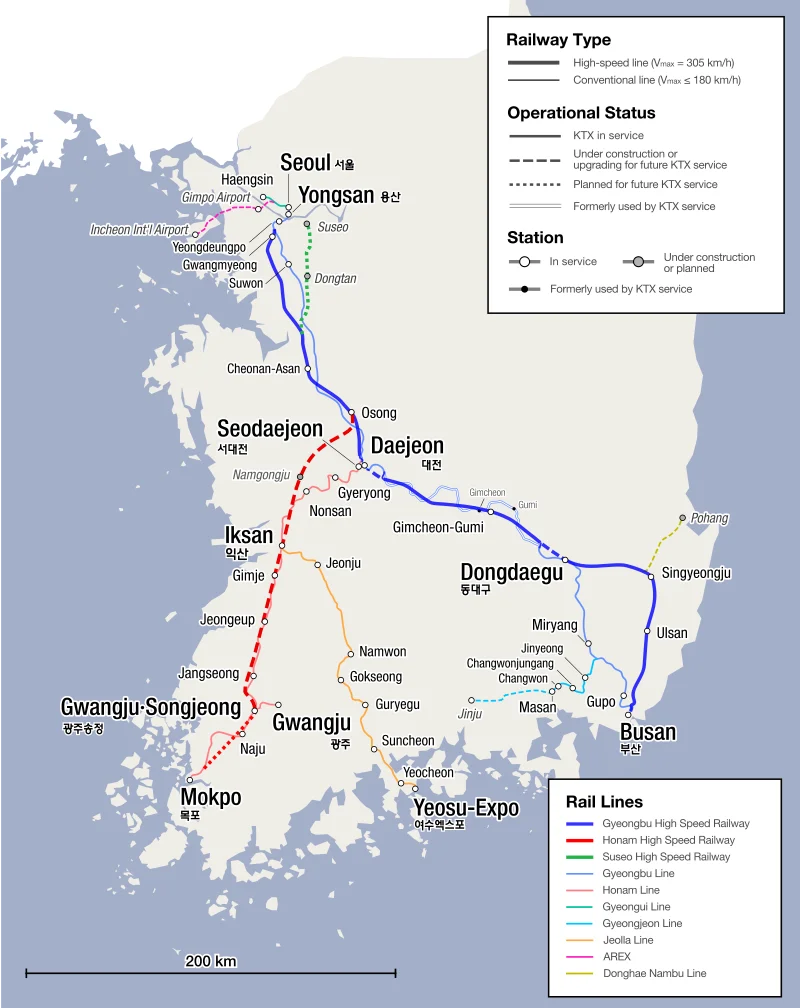
South Korean Railway Route

Is it possible? Theoretically, yes. But as we see it, attempting to reach industrialized status without rail is like trying to run a marathon with a weighted vest. You might finish, but you’ll be slower, more exhausted, and outpaced by everyone else.

For the Philippines to truly unlock the economic potential of the "Big Islands" (Luzon and Mindanao), we believe we must move past the age of the truck and embrace the efficiency of the track.

We’d love to hear your thoughts—do you think the "Maritime-First" approach is enough for us, or are we decades behind on the tracks?

AI assistance (Gemini) was used to help draft and organize this blog post; the author takes full responsibility for the final content.

Saturday, December 6, 2025

How Capable is Our Country's Government?

As an independent blogger who's long been fascinated by development economics and the role governments play in shaping prosperity, I often revisit classic reports that still hold surprising relevance. One that keeps coming back to me is the World Bank's World Development Report 1997: The State in a Changing World. Back in the late 1990s, we were in the thick of debates about "rolling back the state," but this report pushed a more nuanced view. Today, I want to share my personal take on its core concept—state capability—in a way that feels fresh and conversational.

State Capability Infographics

What Exactly Is "State Capability"?

When I first dug into the 1997 WDR, the definition jumped out at me: state capability is the state's ability to undertake and promote collective actions efficiently. It's not just about having big budgets or lots of bureaucrats—it's about getting things done reliably and without chaos.

We (meaning the development community at the time) realized that for human welfare to really improve, governments need to be competent at delivering on essentials like law and order, public health, and infrastructure. A capable state doesn't try to do everything; it focuses on what it can do well and does it predictably. That idea still feels radical in an era when states are often overloaded or distrusted.

Five Core Tasks

The Five Core Tasks Every Government Should Master

The report laid out five fundamental things states must handle if they're serious about supporting development. These aren't optional extras—they're the foundation:

  • Establishing and Protecting the Rule of Law  
    • Think secure property rights, enforceable contracts, and a legal system people can actually trust. Without this bedrock, markets don't function and investment stays away.
  • Providing Basic Public Goods  
    • Things like basic education, primary healthcare, and reliable infrastructure—areas where private markets often fail or under-invest. These are the building blocks of long-term growth.
  • Ensuring Efficient and Consistent Implementation  
    • Policies are only as good as their execution. Arbitrary changes, delays, or favoritism kill credibility fast.
  • Restraining Arbitrary State Action  
    • This means checks on corruption, abuse of power, and unchecked discretion. Transparency, accountability, and clear rules keep the state from becoming part of the problem.
  • Coordinating Collective Action  
    • From environmental protection to macroeconomic stability, some challenges require society-wide coordination that individuals or firms can't pull off alone.

Whenever I read this list, I can't help but think of real-world examples—both successes and failures—that prove how crucial these are.

The Two-Part Strategy I Still Find Compelling


What really stuck with me was the practical roadmap the report proposed to fix the capability gap (the mismatch between what people expect from the state and what it can actually deliver). It's refreshingly straightforward:

  1. Match the State's Role to Its Current Capabilities: If institutions are weak, don't overreach. Focus narrowly on the essentials instead of promising the moon. Spreading yourself too thin leads to failure, lost trust, and corruption. I've seen this play out in so many places—ambitious programs that collapse under their own weight.
  2. Reinvigorate and Build Capability Over Time: Strengthen institutions step by step: introduce better rules and restraints, bring in competition (through private partnerships or outsourcing where it makes sense), fix incentives for public servants (merit pay, career paths), boost transparency, and open the door to citizen participation. It's about evolution, not revolution.

This wasn't a call to shrink government blindly—it was about making government work better as a partner and enabler.

Why This Still Matters in 2026

Looking around today, from emerging markets to even some advanced economies, the capability question feels more urgent than ever. States that can deliver predictably and fairly tend to foster trust, investment, and progress. Those that can't? They breed frustration and instability.

The 1997 report showed us that development isn't just about policies on paper—it's about institutional muscle. A capable state doesn't dominate society; it empowers it.

What do you think? In your own country or region, do you see governments living up to these principles—or falling short? Drop a comment below; I'd genuinely love to hear your perspective.

AI assistance (GrokAI) was used to help draft and organize this blog post; the author takes full responsibility for the final content.